DeafSpace Lab
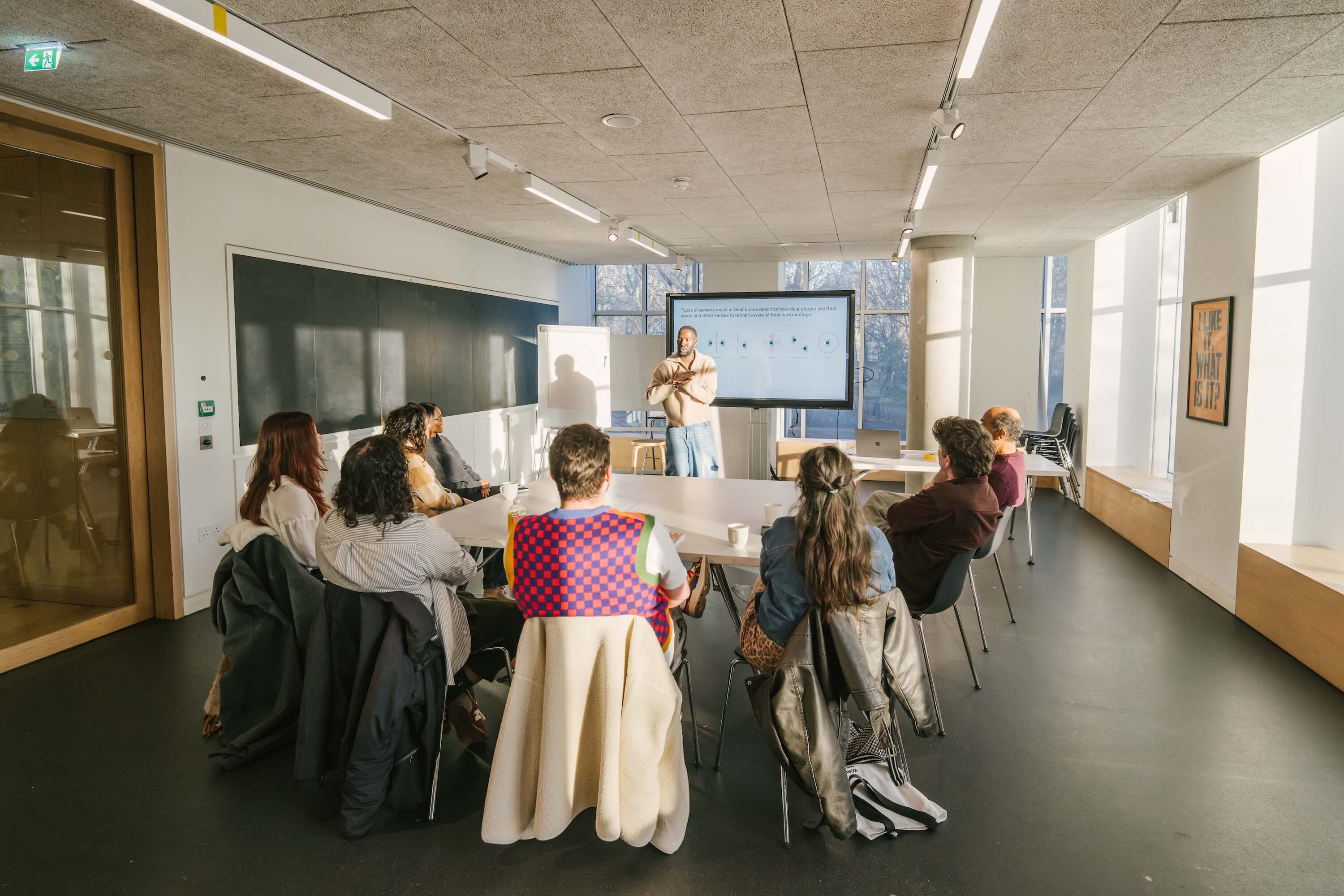
Current building regulations and design guidance offer limited recognition of Deaf users’ needs, which often means they are excluded from meaningful involvement in the design of homes, cultural buildings, workplaces and public spaces.
The DeafSpace Lab addresses this gap by creating a structured, supportive environment in which Deaf participants can share their lived experience, identify design challenges and develop practical, evidence-based solutions. This generates resources and guidance to support architects, developers and local authorities in creating safer, more inclusive environments which are better suited to Deaf people.
Our winter cohort of DeafSpace Lab was sponsored by developers Ballymore. Their Camley Street development in Camden covers a range of building typologies, including theatres and cultural venues, homes, offices, care homes and mixed-use buildings.
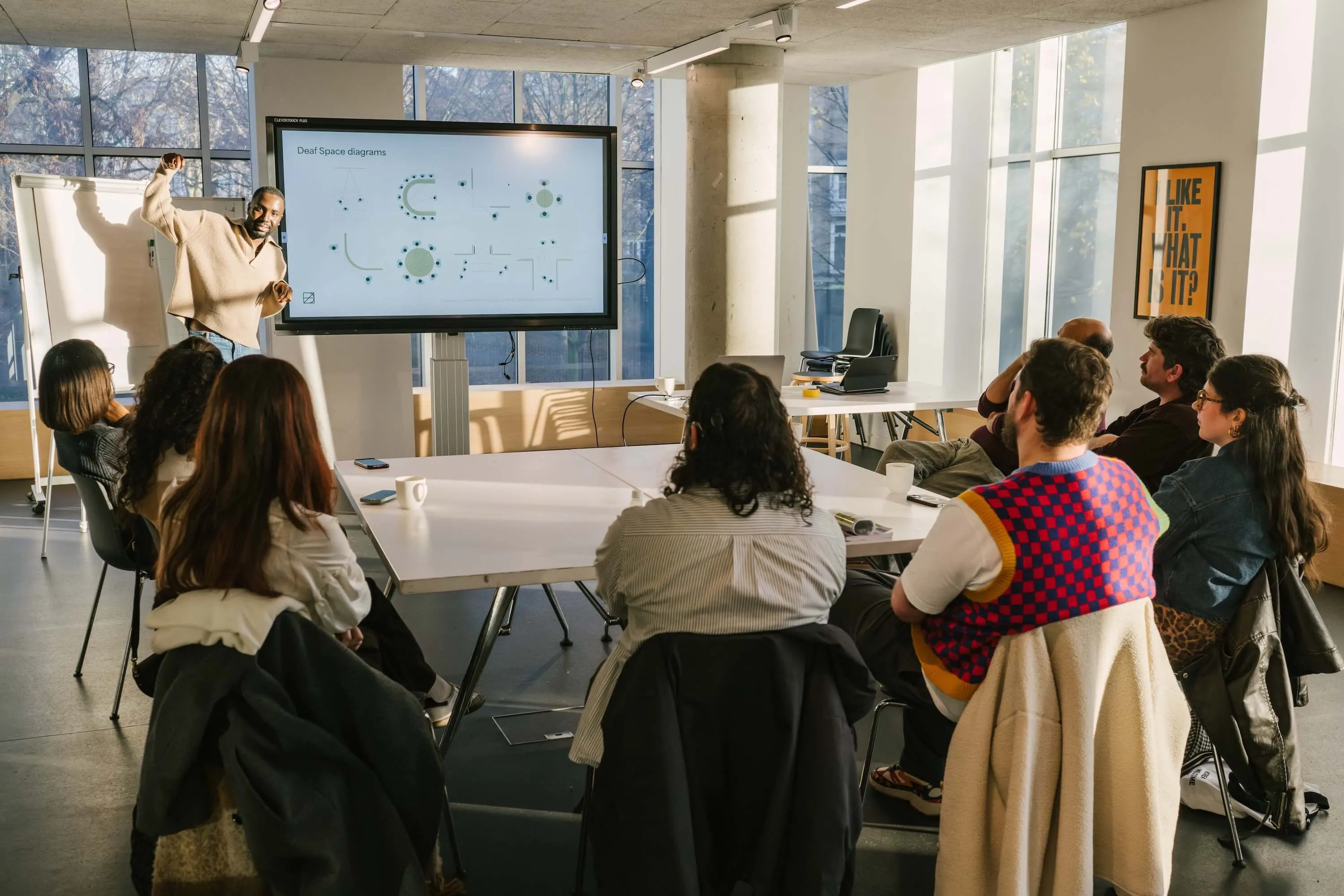
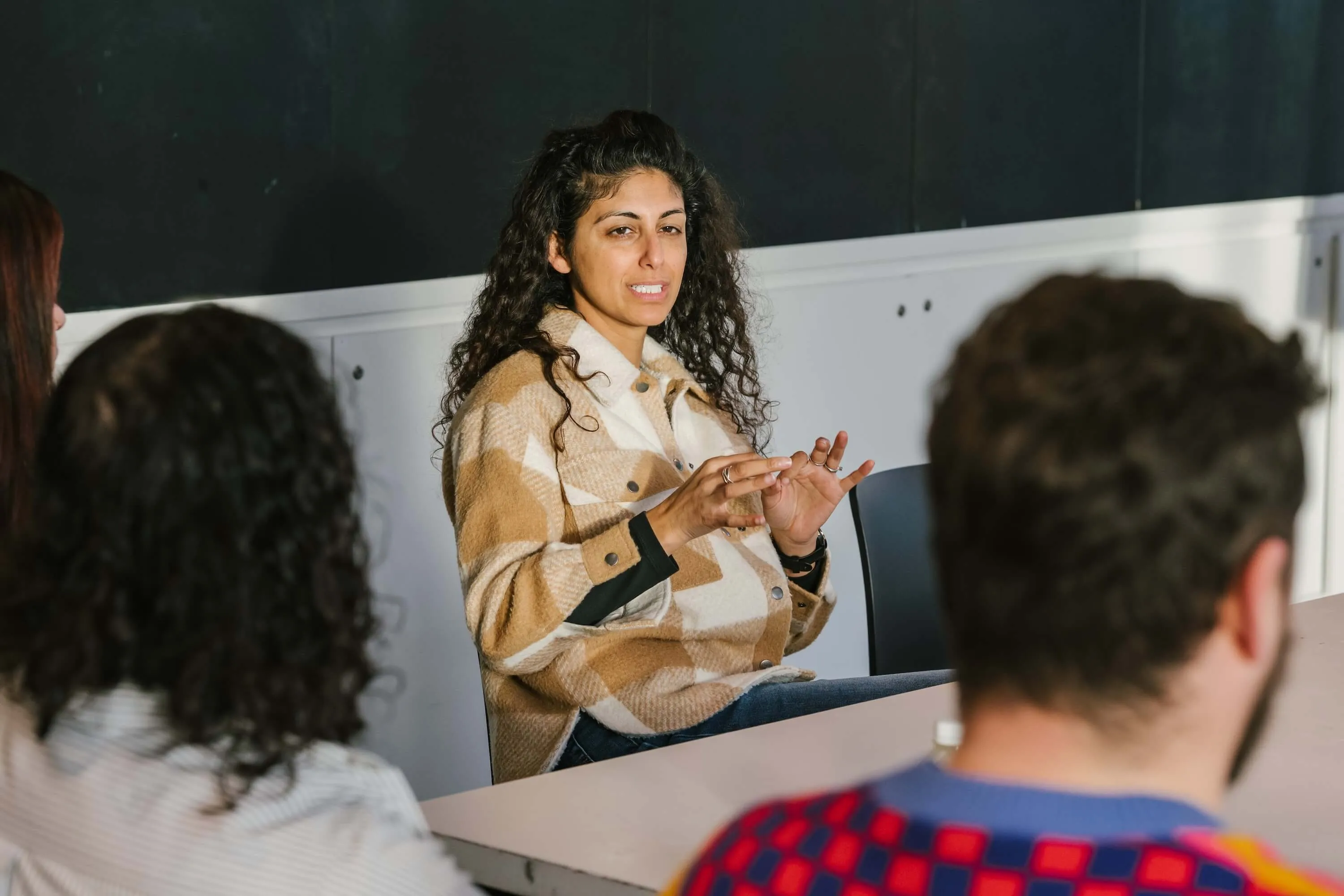
Eight Deaf participants were selected to take part and undertook site visits to relevant buildings within the scheme to analyse the environment, identify barriers and assess how current design approaches succeed or fail for Deaf users. Their findings were collated into a detailed report which will form the basis for future design guidance. This way DeafSpace principles will inform design thinking in a practical way rather than being treated as an afterthought.
Deaf Architecture Front extends its thanks to Ballymore and the Camley Street Development team for funding and supporting this important project.
Winter 2025 DeafSpace cohort
Thank you to our DeafSpace Lab participants, whose generosity insight, and lived experience shaped rich conversations and meaningful learning:
Amanprit Arnold
Andrew Baillie
Tayyeb Badwe
Semhar Beyene
Martin Glover
Lucy Guthrie
Jade McCrory
Hugh Mulloy